
"coffee agriculture decline"
700 article(s) found
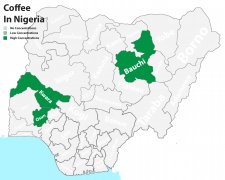
Explore the coffee industry in Nigeria () Nigeria coffee bean flavor production development story and brand
Coffee was first introduced to Nigeria in the late 19th century and first recorded exported in 1896. Coffee has been a major cash crop for farmers in the country for decades. However, into the 21st century, coffee production in the country began to decline. Although Nigeria farmers planted about 89,000 60-kilogram bags of coffee in 2006, that number
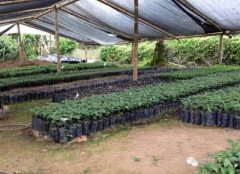
A brief introduction to the cultivation of high-quality Angolan boutique coffee beans, geographical location, climate and altitude
The Secretary-General of the African Coffee Organization (Coffee Organization), Joseph Farrayasarko, said on the 10th that Angola is expected to regain its status as a major coffee producer in the world due to the launch of a nationwide coffee planting campaign. In analyzing the global financial crisis and the situation of the international coffee market, Sako said that there are still gaps in the international coffee market. Angolan coffee should not only improve its output, but also its quality.

History of the Origin and Development of Brazilian Coffee the Future trend of Flavor and Taste in Brazilian Coffee Bean producing areas
The origin of Brazilian coffee several historians agree that the arrival of coffee from the Old World to Martinique and the Antilles originated in 1714 when Mathieu de Clieu, the captain of the French army, got it from the first branch seeds brought by small American plantations. The story tells us that the captain is keeping a coffee branch stolen from Louis XIV Garden.

Kenya Coffee producing area Information Kenya Coffee Industry ushered in New opportunities Coffee Bill 2020 passed
Professional coffee knowledge exchange more coffee bean information please follow the coffee workshop (Wechat official account cafe_style) Kenya's coffee industry is gradually fading, Kenya coffee, the pearl of Africa is also losing its luster. Kenya's coffee industry peaked in the 1990s, but has since collapsed. Coffee in Kenya

Bolivian Coffee Flavor | Nicholas small Farmer | what are the varieties of individual coffee?
Professional coffee knowledge exchange more coffee bean information please follow the coffee workshop (Wechat official account cafe_style) Bolivian coffee Yonggas Karana Nicholas small farmer washing treatment method organic certification Boliva Yungas Caranavi Collasuyo Nicolas Colque Organic Washed Agriculture and Food Department organic food input No. 106-1562-00002
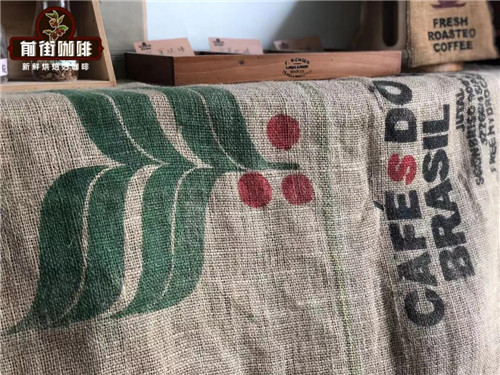
Brazil's coffee export output reached an all-time high of 44.5 million bags in 2020 in advance of the Brazilian coffee production crisis.
For more information on coffee beans, please follow the Coffee Workshop (official Wechat account cafe_style). According to foreign media reports, the European Union and the United Kingdom have held global public consultations on the import of agricultural commodities, a move to force big companies to ensure that deforestation no longer leads to forest degradation. According to the British due diligence on Forest risk Commodities, which ended in early October this year,

Yunnan Arabica coffee future development trend Yunnan coffee industry rapid development
Yunnan is the only coffee-producing area in China. With its unique climate and changeable geographical environment, Yunnan grows coffee with multi-level taste, which can be regarded as unique among coffee producing areas in the world. In recent years, Yunnan coffee industry has developed rapidly. Yunnan coffee has developed from more than 300,000 mu in 2008 to more than 1.4 million mu at present. Production rose from about 30,000 tons to more than 80,000 tons in 2013.

What are the main flavor characteristics of Bolivian coffee beans
Professional coffee knowledge exchange more information about coffee beans Please follow the coffee workshop (Wechat official account cafe_style) if you want to talk about the paradise where coffee beans grow, it is not a paradise. This region can be regarded as one of the most popular boutique coffee producing areas. Most of the coffee beans in this area are sweet and very popular, but the quantity of coffee beans is very small.

How is the flavor of Kenya PB? kenya kisii is introduced in Kisi, Kenya.
Name: PB Origin, Kenya: elevation: 1700-1950m varieties: blue Mountains, SL-34,SL-28 processing: washing treatment Grade: PB (adzuki bean) Kisi (Kisii) this area is located in southwestern Kenya, not far from Lake Victoria, is a relatively small producing area, most coffee comes from small producers of common cooperatives. Ratio

The production of Angolan coffee beans ranked first in Africa until 1960.
Angola's Angola, which has been growing coffee for more than 100 years, ranked first in Africa until 1960 and reached 225000 tons in 1979, ranking second in Africa and fourth in the world. The output in 1992 was 5000 tons. Sisal production is second only to coffee, and the level of per unit yield is higher. In 1986, the output reached 20,000 tons, sisal ranked second in Africa both in terms of output and export volume. Luo'an, Xinhuanet

Venezuelan Coffee Industry introduces Fine Coffee producing countries
The coffee industry in Venezuela has been shrinking in recent years. The government encourages coffee cultivation by introducing new varieties and providing loans to farmers. Venezuelan coffee production accounted for more than 7% of global coffee production in the 19th century, but since the discovery of oil in the early 20th century, the coffee industry has been in decline. At present, Venezuelan coffee production accounts for less than 1% of the world's output.

Severe loss of coffee production caused by drought in Brazil is expected to be reduced by 30%.
According to a report on the website of Brazilian newspaper Le Sao Paulo on November 3, in a plantation in Eloy Mendes (southern state of Minas Gerais), Jean Philippe, a 25-year-old agricultural technician, measured the height of a 2-year-old coffee tree with a ruler. The result is 80 cm, but if Minas Gerais has sufficient rainfall this year, the normal height of the coffee tree should reach 1.3.

Nicaragua coffee history, Nicaragua coffee introduction
Pay close attention to coffee comment (Weixin Official Accounts vdailycom ) and find that beautiful coffee shop opens its own small shop. Like other countries, Nicaragua is also a poor country, and coffee is also its main export crop. Nicaragua also suffered heavy losses during Hurricane Mitch in 1998. Below, Fuller Coffee experts will take you into the country's coffee

Honduras-#8231; Central and South American Agriculture and Animal Husbandry-Marcala Coffee Fair Trade
Professional coffee knowledge exchange more coffee bean information please follow the coffee workshop (Wechat official account cafe_style) Honduras Central and South America Agriculture and Animal Husbandry-Markara (Marcala) Coffee Fair Trade Association (F.T) the flavor of washed beans? Coffee produced in Honduras is rarely found in Taiwan's coffee market, but in terms of altitude and temperature changes and soil fertility.

History and Culture of Coffee beans in Burundi what is the mode of transportation and sales of coffee agricultural production and development
Coffee was introduced to Burundi by Belgian colonists in the 1920s, when it was a forced crop: farmers were required to plant a government-mandated number of coffee trees, of course, with little for their labor or land. Once the country gained independence in the 1960s, the coffee industry (and others) was privatized, depriving control from the government unless research was necessary.

Introduction to the flavor and taste characteristics of coffee in Nicaragua's Tianyi Manor with rich aroma, smooth and meticulous taste.
In many countries, coffee production will be seriously affected for political reasons. Nicaraguan coffee industry is no exception. The 1979 revolution forced coffee planters to flee to Miami. A period of indecision followed, when the government considered whether to redistribute land (including many plantations), which led to a shortage of coffee and a decline in production since the early 1970s
A trip to coffee beans
Following the five coffee giants Nestl é, Maxwell, Kraft, Newman and Ikham, Starbucks, which calls itself a "real coffee company", recently joined the ranks of coffee buyers in Yunnan, China, where it will establish its first coffee planting base in the world.

Ivorian Coffee Industry introduces Ivorian Coffee planting History and Coffee production Export
More information on coffee beans Please follow the coffee workshop (official Wechat account cafe_style) since coffee beans are the second largest export in C ô te d'Ivoire, the country's coffee industry is particularly important to the local economy. [1] in addition, the country was the largest coffee exporter in Africa between the 1970s and 1980s, and is now one of the largest countries in the world.

Smooth and sweet Venezuelan coffee producing area of San Cristobal
The coffee industry in Venezuela has been shrinking in recent years. The government encourages coffee cultivation by introducing new varieties and providing loans to farmers. Venezuelan coffee production accounted for more than 7% of global coffee production in the 19th century, but since the discovery of oil in the early 20th century, the coffee industry has been in decline. At present, Venezuelan coffee production accounts for less than 1% of the world's output.

A brief introduction to the history and culture of the origin and development of Angolan boutique coffee beans that are almost impossible to buy.
Angola was once one of the largest coffee producers in the world, with coffee production reaching a record 225000 tons in 1974. However, as a result of the 27-year civil war that broke out after independence in 1975, Angolan coffee production fell sharply, Angola's ambassador to the United States, Agostinho Tavares, told Angolan daily newspaper Jornal de Angola on Monday in New York that the first batch of Angolan coffee exported to the United States (a total of 11 tons) had arrived in the country.